HandsApp started with one detail most QR menus missed.
The idea was never just to show a menu through a QR code. The real question was simpler and more important: how can the table itself become part of the ordering experience?
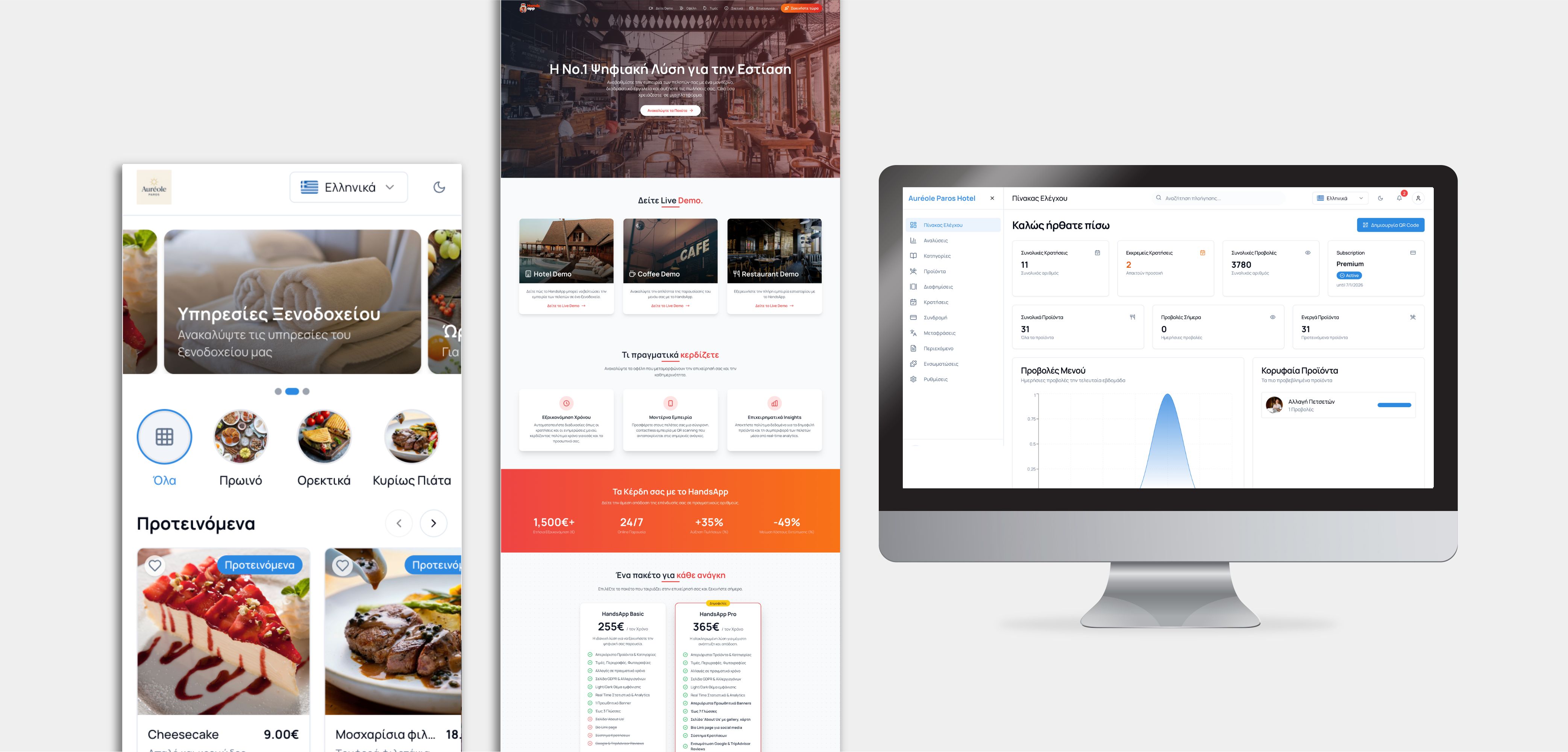
Around late 2019, when the world was about to change and hospitality was about to feel that pressure more than almost anyone, the first HandsApp idea came from a very practical problem.
Restaurants, cafes and hotels did not only need a digital menu. A digital menu was useful, but it was not enough. If the customer still had to select a table manually, explain where they were sitting, wait for staff to connect the order to the right place, or fight through a clumsy checkout, the experience was still broken.
The better idea was this: each QR code should already know its table. The customer scans, sees the menu, adds products, chooses extras and sends the order with the table context already attached. No awkward table selection, no unnecessary checkout fields, no confusion for the business.
HandsApp started from a small but important belief: if technology enters a busy restaurant, it must reduce pressure, not create another screen people have to fight with.
That detail shaped the whole product. HandsApp was not built as a decorative QR menu. It was built as a smoother ordering layer between the customer, the table, the kitchen, the bar and the owner.
Today, the platform has grown far beyond the first idea. It supports modern hospitality operations with orders, menus, tables, offers, dashboards, customer flows, payments, reporting, demos, pricing packages and business control without commission per order.
The table was not a checkout field. It was the starting point.
The QR knows the table
The customer does not need to choose a table from a checkout dropdown. The QR already carries that context.
The order arrives cleanly
Kitchen, bar and staff receive the order with the correct location, fewer mistakes and less back-and-forth.
The business keeps control
Menus, prices, availability, payments, orders and reports stay inside the business system, without commission per order.
From one QR idea to a full hospitality system.
The product kept growing because the original problem was real. A venue needs fewer mistakes, faster service, clearer orders, live visibility and a direct relationship with its customers.
What made it different
The focus was not to copy the paper menu onto a phone. The focus was to make ordering feel natural from the seat, room, beach bed or takeaway flow where the customer actually is.
Why it still matters
Hospitality is fast, physical and stressful. Software only belongs there when it makes service lighter: fewer errors, faster decisions, better data and a calmer customer experience.

Andrew Matia - LineWeb
Founder of LineWeb and creator of HandsApp. I write these product stories to show how real platforms begin: from a small operational detail, a business problem, and the decision to build something that actually helps people work better.
HandsApp is now a living product.
It began with a table-aware QR idea and became a platform for restaurants, cafes, hotels and venues that want more control over ordering and operations.