Autobot was my first serious automation platform.
Before AI tools became a daily conversation, I was already trying to build a platform that could help a business automate communication, marketing, sales and ecommerce from one place.
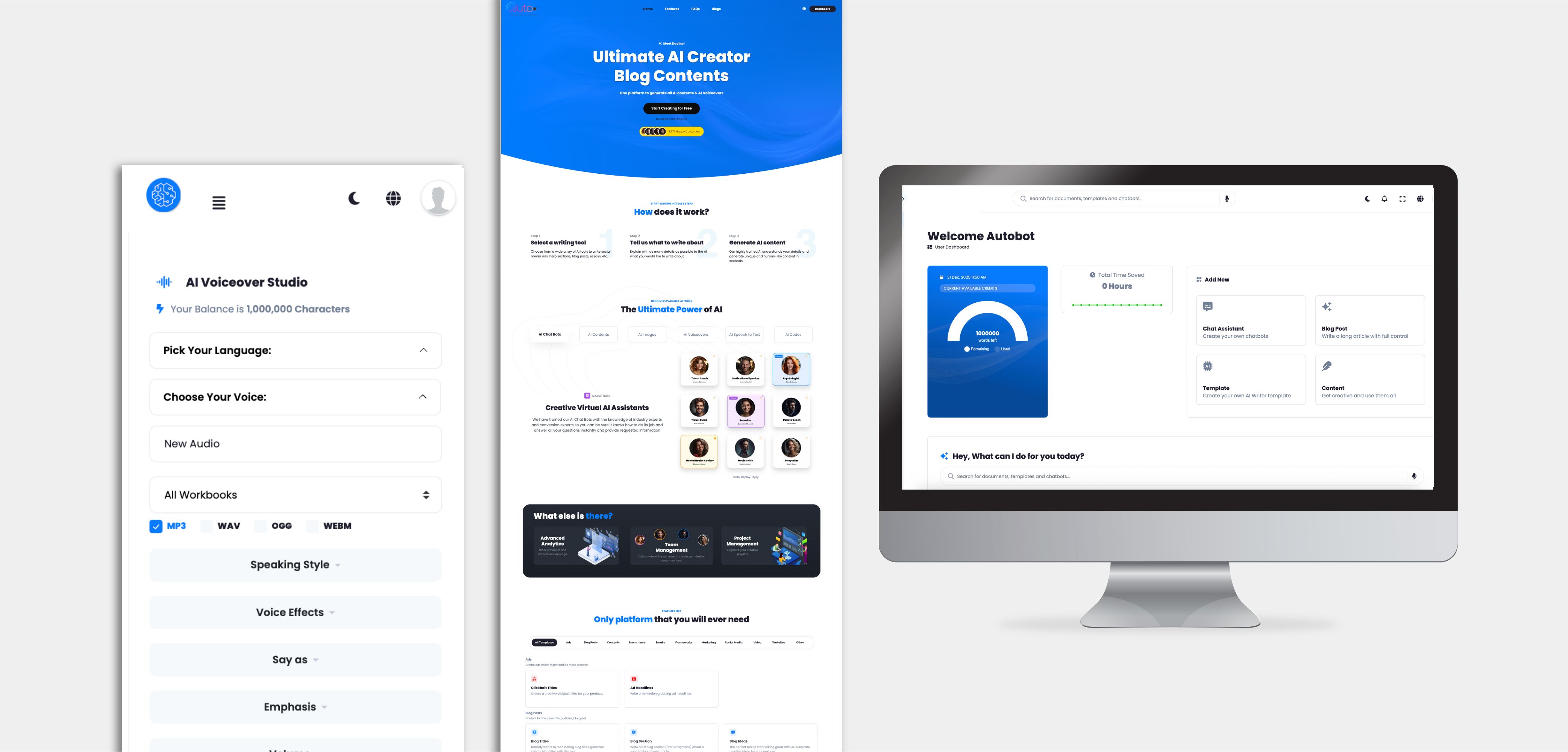
Autobot was the first project where I stopped thinking only like a website builder and started thinking like someone responsible for the full digital flow of a business.
It was not just a landing page, a dashboard or a chatbot. It was an early attempt to connect the things a business needs every day: messages, follow-ups, products, payments, campaigns and simple automation that keeps working when the owner is busy.
The idea sounded simple when I described it, but it was much harder when I had to build it properly: an all-in-one platform for marketing, sales, automation and ecommerce, with a visual chatbot builder that did not ask the user to write code.
Looking back, Autobot was not only a product. It was the moment I understood that software becomes valuable when it removes repeated work and keeps the business closer to the customer.
The platform had a drag-and-drop chatbot creator, Facebook Messenger and Instagram DM communication, ecommerce flows inside Messenger, browser-based shop access, and tools for social media, email and SMS marketing.
At the time, that felt early. Many businesses still thought of a website as the final destination. Autobot pushed me to see the website as one part of a bigger system: a place where communication, data, sales and customer intent should meet.
Today, the same thinking appears everywhere: automated conversations, customer journeys, payment flows, remarketing, AI support and multi-channel communication. Autobot was my first serious step into that world, and a lot of the LineWeb mindset was shaped there.
The first shift
Autobot changed the way I looked at websites. A page could explain a business, but a system could answer, follow up, sell and keep working after the visitor left.
The difficult part
The challenge was not only building features. It was making automation feel usable for a real owner who had orders, messages, questions and pressure every day.
The lesson that stayed
The best technology is not loud. It quietly removes repeated work, protects attention and gives a business more control over what happens next.
The features were business-first.
Chatbot flow builder
A visual drag-and-drop way to create automated conversations without writing code.
Messenger and Instagram communication
A business could keep talking to customers where they already spent time.
Ecommerce inside the conversation
Products, selling flows and payments could live inside the Messenger experience and also open in a browser.
Marketing automation
Social media, email and SMS marketing features helped the platform move beyond simple chat.
What I learned
A strong automation platform is not about making things look complex. It is about making repeated actions clearer: answer faster, follow up better, sell with less friction and give the business owner more control.
Why it still matters
Autobot shaped how I think about the systems we build today at LineWeb: websites should not be isolated screens. They should connect to operations, leads, automation, communication and measurable business action.

Andrew Matia - LineWeb
Founder of LineWeb, software builder and digital systems creator. I write these stories to keep the real history behind the work visible: the experiments, the pressure, the lessons and the decisions that shaped how we build today.
The lesson became part of the way we build.
Today, that thinking appears in our CRM platforms, booking systems, AI workflows, lead systems and custom business tools.