Ecommerce ERP integration: what should your store sync first?
Updating stock twice and copying orders between systems takes time away from customers. The right connection starts with the work your team repeats every day.
Start by choosing where stock and prices are maintained, then connect confirmed orders to the team's daily workflow. An ERP integration is worthwhile when it removes repetitive entry without creating uncertainty about what was sold, what is available or what needs attention.
Your store and your back office should tell the same story.
Three connections that make the difference
Prioritise the information people currently update by hand.
Available stock
Match product codes and variants, choose the relevant warehouse and agree how quickly availability should update after a sale.
Correct prices
Keep retail prices, tax and professional customer terms consistent. Decide which system owns changes before connecting discounts or multiple price lists.
Ready-to-process orders
Transfer the details staff actually need: products, quantities, customer information, delivery and payment status. Prevent the same order from being imported twice.
Less copying. More time for customers.
For a retailer selling online and in-store, both channels draw from the same stock. Connecting availability helps avoid accepting orders staff cannot fulfil. When an online order arrives with complete details, the team can prepare it instead of retyping it. Cancellations, returns and unusual payments still need clear handling.
Connect the essentials before adding everything else
Start with one catalogue and a defined order flow. Test normal purchases, missing product codes and returns with your team. Compare an existing connector with custom development against these needs. Include setup, any ERP access fees and ongoing monitoring in the budget, with someone responsible when a transfer needs attention.
B2B buying needs more than a standard checkout
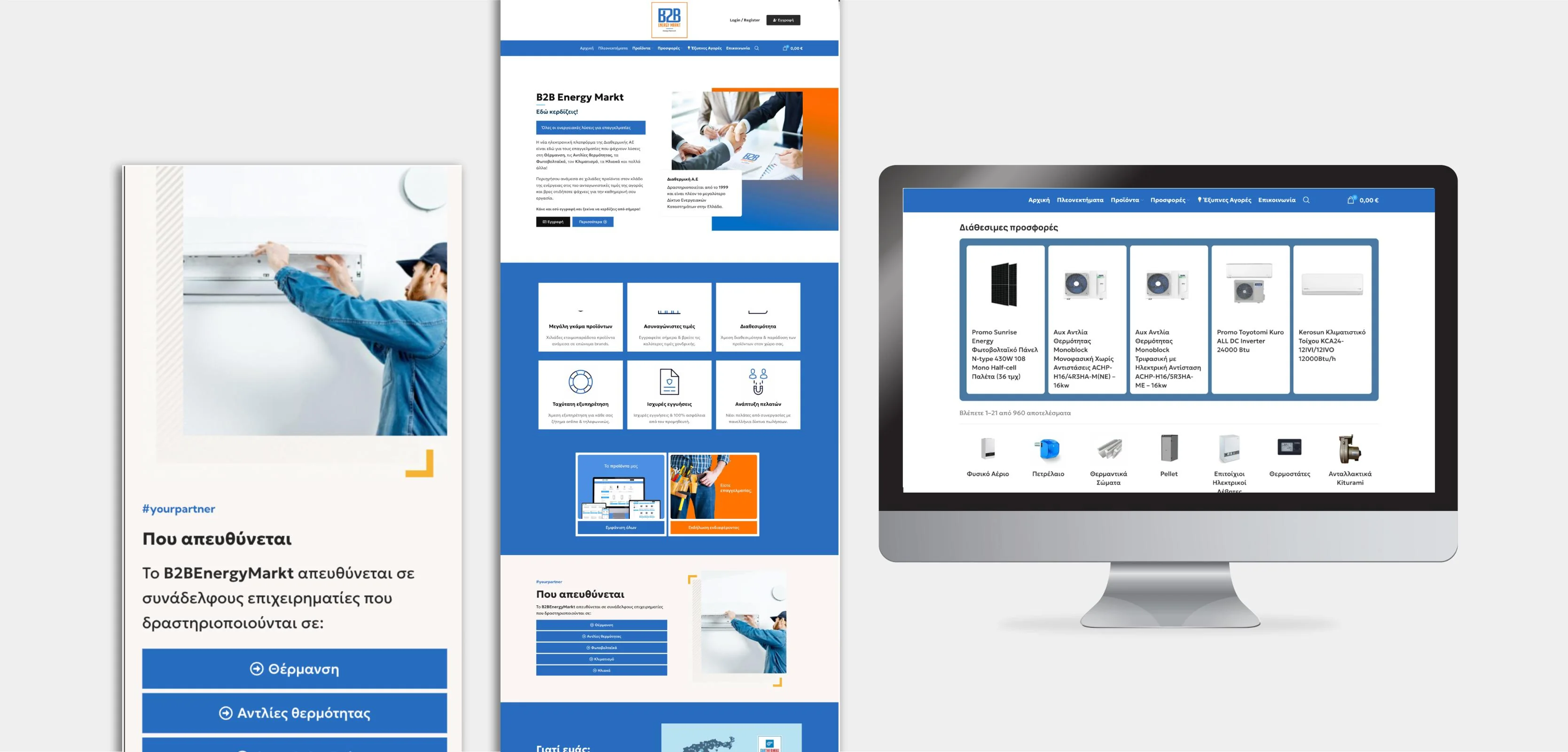
For B2BEnergyMarkt, we built purchasing around professional buyers, protected pricing and clearer product discovery. We bring the same attention to business rules when planning connected commerce.
See B2BEnergyMarkt Explore our integration servicesClear answers, without the jargon.
01Do I need to replace my e-shop?+
Often, no. First check whether your existing store and ERP support the required connection. A rebuild makes sense only if the current setup also limits the shopping experience or operations.
02Should stock update instantly?+
It depends on how quickly items sell and whether other channels share the stock. Agree a suitable update frequency and how to handle the last available units.
03When is a custom integration worth it?+
When an existing connector cannot handle your pricing, warehouses or order process reliably. For a straightforward store, a supported connector may be enough.

Andrew Matia - LineWeb
Founder of LineWeb. I write about the practical side of websites, systems, automation and search: the decisions that make a business easier to run and clearer to find.
Read the founder storyStill entering the same order twice?
Tell us which e-shop and ERP you use, and what your team repeats manually. We will help define a focused integration and a clear implementation scope.