Can you add English to your website without rebuilding it?
An English-speaking customer should be able to understand your offer and take the next step without calling to clarify the basics.
Usually, yes. Keep the current site if it can serve separate language pages and carry the chosen language through the form, booking or checkout. Start by checking those paths. A rebuild only makes sense if the current setup makes a reliable second edition impractical, or if there are other problems worth solving at the same time.
Translate the customer's next step, not just the headline.
What to agree before asking for a quote
Start with the audience and the action you want them to take.
Which pages come first?
Choose the services, products or locations relevant to the new audience. Translate the contact or booking path alongside them, including errors and confirmations.
What changes for this audience?
Check delivery areas, payment instructions and support hours. Make the information useful to the reader instead of translating every sentence word for word.
Who updates both editions?
Name someone to approve new copy and update both languages when prices, availability or terms change. Include this work in the ongoing budget.
Keep existing links and connect the equivalents
For a Greek-first site, a separate English path such as /en/ can keep existing addresses in place. Give each translated page its own title and link it to its counterpart with a language selector and reciprocal language annotations. Where an address has to change, map the redirect to the closest replacement before publishing.
Check the customer journey on a phone
For example, an English-speaking traveller should be able to read pick-up details, choose dates and understand the booking result in the same language. Ask someone unfamiliar with the site to complete that task. Budget separately for writing, implementation and review, especially where forms and emails use different systems.
DriveThess: languages beyond the homepage
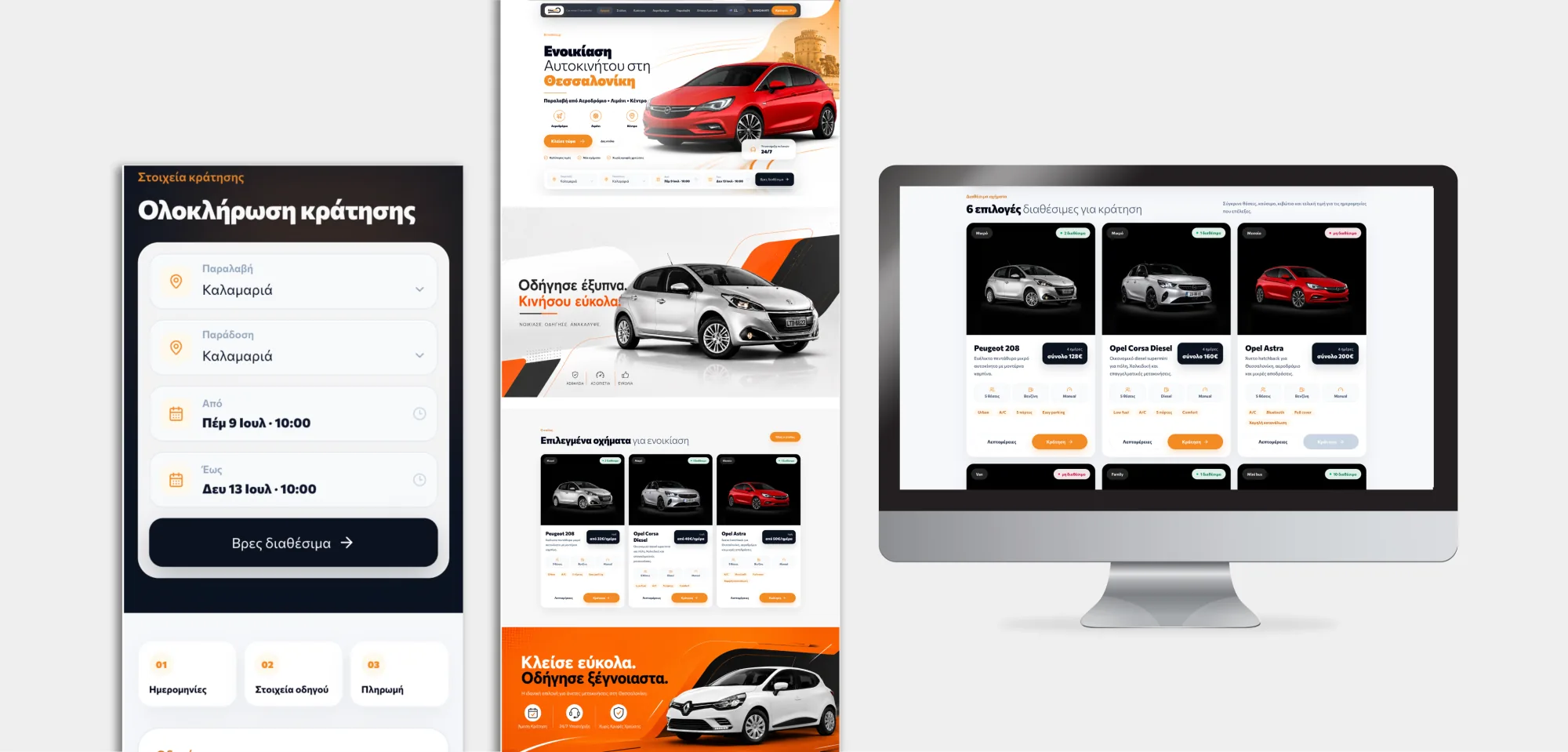
For DriveThess, we built a vehicle rental site with availability-aware booking and support for Greek, English, French and German campaign journeys. It is a useful example of why the language decision belongs in the booking plan, not just the homepage brief.
See the DriveThess rental project Explore LineWeb website developmentClear answers, without the jargon.
01Do I need to translate the whole website?+
No. A focused set of pages is a good start if customers can complete the intended action in English. Add more when there is a clear need.
02Can I use automatic translation?+
It can speed up drafting. Have someone review terminology, prices, terms and instructions before publishing, particularly on purchase and booking screens.
03Will I need a second domain?+
Not just to add English. Separate URLs on your existing domain can work well when the business and website are shared.

Andrew Matia - LineWeb
Founder of LineWeb. I write about the practical side of websites, systems, automation and search: the decisions that make a business easier to run and clearer to find.
Read the founder storyStart with your current site
Send us your website, target audience and the action customers need to complete. We can assess what to keep and scope the English edition around that journey.